10:45 AM - 12:15 PM | Session G: Safety Science & Regulatory Trends
The Invisible Risk: Impurity Profiles, Non‑Intentionally Added Substances (NIAS), and the Next Wave of Cosmetic Safety Challenges
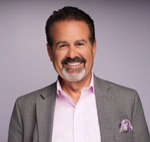
Presented by
Carl D'Ruiz, MPH
dsm-firmenich
Abstract
Cosmetic safety assessments have historically centered on intentionally added ingredients, yet a growing number of regulatory findings and product recalls point to a different challenge: substances that were never intended to be present. Impurities, degradation products, residual processing aids, and non-intentionally added substances (NIAS) can emerge from raw materials, manufacturing, packaging interactions, and product aging, creating toxicological risks that are often absent from traditional ingredient-based evaluations.
This presentation examines publicly available recall, enforcement, and inspection data to identify trends linking safety concerns to impurity and NIAS profiles rather than formulated ingredients. Findings highlight how advances in analytical science are exposing gaps between declared composition and actual product chemistry. The work challenges the industry to move beyond ingredient-list safety and embrace a more comprehensive, lifecycle-based approach to product substantiation, risk assessment, and regulatory readiness.
Speaker Biography
Carl D’Ruiz is a recognized leader in sunscreen photoprotection, cosmetic innovation, and OTC regulatory science, with more than 30 years of experience advancing science-based solutions that improve consumer health, safety, and product performance. At dsm-firmenich and as former Chair of the Personal Care Products Council (PCPC) Sunscreen Consortium, he has helped shape industry regulatory and scientific strategy. Carl led the first FDA Tier 1 OMOR and GRASE approval of a new sunscreen active ingredient in more than 25 years—PARSOL® Shield (BEMT)—a milestone that expanded opportunities for next-generation UV protection technologies in the United States. A strong advocate for modern toxicology, non-animal testing, and risk-based safety assessment, he serves on the Society of Cosmetic Chemists Scientific Affairs Committee, is a board member of the Photodermatology Society, and is a member of the Society of Toxicology and the American Academy of Dermatology.
Closing the Ingredient Data Gap: A Retrosynthesis-Based Model for Life Cycle Assessment of Cosmetic Ingredients

Presented by
Evan Peters
Fairglow
Abstract
The cosmetics industry lacks reliable environmental data: fewer than 1% of the 30,000 cosmetic ingredients (INCI) are covered by standard LCA databases, forcing formulators to rely on generic proxies. We present a retrosynthesis-based methodology that reconstructs each ingredient's real sourcing and production pathway to generate accurate Life Cycle Assessments (LCAs), eliminating the need for proxies. For synthetic, biotechnology, plant-, and mineral-based INCI alike, the methodology models specific material, energy, and process inputs, converting results into the 16 standardized environmental impact categories of the EU's Product Environmental Footprint (PEF) framework, plus a normalized single score. It models 99% of common INCI by mass, across 1,000+ detailed models and 170+ reaction and process templates, and is certified to ISO 14040/44/67 by Bureau Veritas (2026). By providing ingredient-specific data at scale, this methodology closes the ingredient environmental data gap and supports eco-design based on each ingredient's actual environmental cost.
Speaker Biography
Evan Peters is the co-founder of Fairglow, a company dedicated to helping the cosmetics industry measure and reduce its environmental impact. With a background in environmental regulations and data science, Evan's career has focused on quantifying sustainability. Before starting Fairglow in Paris, he led product development at Smarter X in Texas and Emex in the UK. Having attended INSEAD Business School and stayed in Europe, Evan brings a depth of experience to his work. His goal is simple: to ensure sustainability efforts are accurately quantified, empowering people to make decisions that lead to meaningful change.
Presentation on California Regulatory Update

Presented by
Avril Love
K&L Gates
Abstract
Abstract Coming Soon
Speaker Biography
Avril L. Love is a partner at K&L Gates, LLP in Los Angeles. She defends consumer product and personal care companies in court from consumer and e-commerce litigation related to advertising claims; emerging contaminants and other product liability issues; Prop 65; product quality concerns; marketing practices; packaging and slackfill; website accessibility; and privacy in the use of adtech. Drawing on industry insight and deep regulatory fluency, Avril represents brands before regulatory agencies and partners with client teams to reduce exposure through practical, business-aligned risk mitigation, including on emerging issues related to extended producer responsibility (EPR) and enforcement of the California Consumer Privacy Act (CCPA). Avril serves on the Independent Beauty Association’s Supply Chain and Sustainability Resources Committee and frequently speaks at beauty industry events.
Fragrance Safety by Design: A Proactive Standard for a Complex Ingredient

Presented by
Ashlee Posner
Lucent Laboratories
Abstract
Fragrance is one of the most complex and least visible ingredients in a cosmetic formula, and the rules
governing it are changing fast. MoCRA, the expanded EU allergen requirements, state VOC limits and
retailer restricted lists are reshaping what “safe” and “compliant” mean for every product that carries a
scent. But fragrance safety is not one-size-fits-all. The same material can be acceptable in a rinse-off body wash
and problematic in a leave-on facial serum or an aerosol, depending on exposure, concentration and
thresholds for allergens and VOCs. This presentation explores how formulators can navigate that nuance
proactively rather than reactively. It introduces a validation framework built around the human health and
safety of fragrance across product types, and makes the case for an industry standard that accounts for
how fragrance is actually used. Attendees will leave with a practical lens for designing safer fragrance into
development from the start.
Speaker Biography
Ashlee Posner is the Founder and CEO of Lucent Laboratories, the new standard in fragrance
formulation. Lucent develops, validates and supplies fragrance and flavor formulations with transparency
for skincare, body, hair, deo, home and pet brands. A chemical engineer with more than 20 years in
beauty and personal care, Ashlee brings deep expertise in product development, manufacturing,
compliance and supply chain across CPG. She built Lucent to create a faster, safer path to formulation,
starting with the one ingredient most formulators can’t see behind: “parfum.” Every Lucent formula is
screened through a proprietary validation tool built specifically around human health and safety of
fragrance across product categories. Her view is simple: natural does not equal safe, and formulators
deserve to see exactly what’s in the bottle to make the safest, most effective products.